How to read a sewing pattern
A pattern becomes much less intimidating when you separate sizing, pieces, layout and construction into four decisions.
Choose size from measurements
Pattern sizing can differ from ready-to-wear clothing. Use the body measurements and finished-garment information supplied by that pattern company rather than buying the number printed on your usual clothes.
Inventory the pieces
Before cutting, identify which pieces your chosen view requires and how many of each are cut from fabric, lining or interfacing. “Cut 2” and “cut 1 on fold” create different quantities and symmetry.
Read the layout as a constraint map
Layouts show grain direction, folds and efficient placement for a stated fabric width. Directional prints, nap and one-way designs can require a different arrangement and more fabric.
Read the whole construction sequence once
Later steps often explain why an earlier edge must remain open or why a marking matters. A quick complete read reduces the chance of sewing a seam that blocks a later operation.
Read the pattern in the order you will use it
A commercial pattern is easier to understand when you divide it into four jobs: choose the correct version and size, buy suitable materials, prepare and cut the correct pieces, then follow the construction sequence. Do those jobs in that order rather than unfolding the tissue and trying to decode everything at once.
Choose size from the pattern's measurement chart
Pattern sizing is its own system. Measure the body at the points requested by that pattern company and compare those measurements with its chart rather than using a ready-to-wear label. Then look for finished-garment measurements where provided. The difference between body measurement and finished measurement contributes to ease, which affects how fitted or loose the design will be.
Read suggested fabrics, notions and yardage before shopping
The suggested-fabric list communicates the behaviour the design expects: woven versus knit, stable versus fluid, and sometimes a required stretch percentage. The notions list identifies items such as zippers, buttons, elastic or interfacing. Yardage tables depend on size, view and fabric width, so trace the correct row and column carefully.
Identify the pieces for your chosen view
Multi-view patterns may include several sleeves, collars, lengths or other variations. The instruction sheet normally lists which numbered pieces belong to each view. Mark that list before cutting the paper so you do not prepare pieces you do not need or accidentally omit one you do.
Decode the essential markings
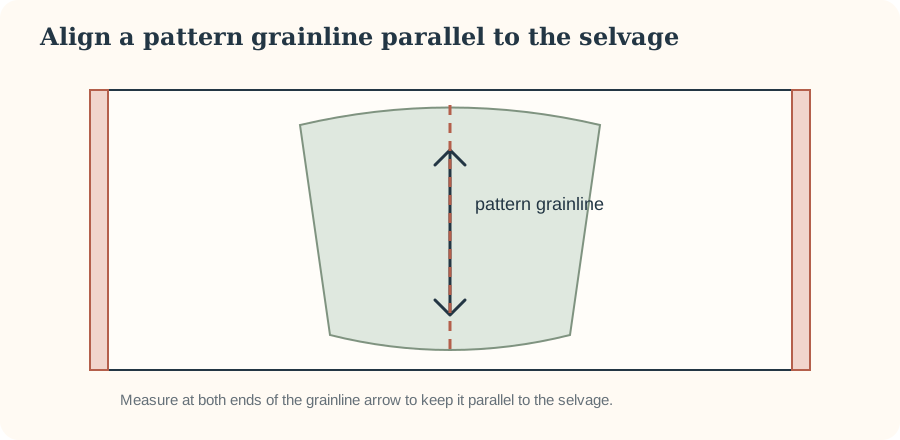
The grainline is aligned as instructed—commonly parallel to the selvage on woven fabric. A place-on-fold marking puts that edge on a fabric fold so the opened piece is symmetrical. Notches help matching seams; dots and circles often mark construction points; darts shape fabric; and lengthen/shorten lines indicate where the pattern is designed to be altered in length. Always use the symbol key supplied with the pattern because conventions vary.
Check seam allowance instead of assuming it
Some patterns include seam allowance and some do not; widths also vary by company and technique. Find the stated allowance before sewing. If you stitch wider or narrower than intended, the finished dimensions change across every affected seam.
Use the cutting layout as a plan, not decoration
Match the layout to your fabric width, size/view and whether the fabric is folded. Pay attention to nap, directional prints and one-way designs. Position grainlines accurately before cutting and transfer required interior markings before removing the paper.
Preview the construction sequence
Read all steps once before starting. Highlight unfamiliar techniques and note where pressing, clipping, grading, gathering or understitching occurs. The goal is to understand what each seam is preparing for; that makes terse pattern instructions much easier to follow.
Ready to try a downloadable garment pattern?
Winslet’s offers downloadable PDF sewing patterns, including a collection aimed at beginners. Sewing Skillbook has not independently tested Winslet’s patterns, so check the current pattern details, sizing and skill level before choosing one.
Reader discount: Use code SEWINGSKILLBOOK for 10% off at Winslet’s. The discount is provided by Winslet’s and may be subject to its current terms.