How to sew corners and pivot neatly
A neat machine-sewn corner comes from stopping at the correct point, keeping the needle in the fabric and rotating the work without losing the seam allowance.
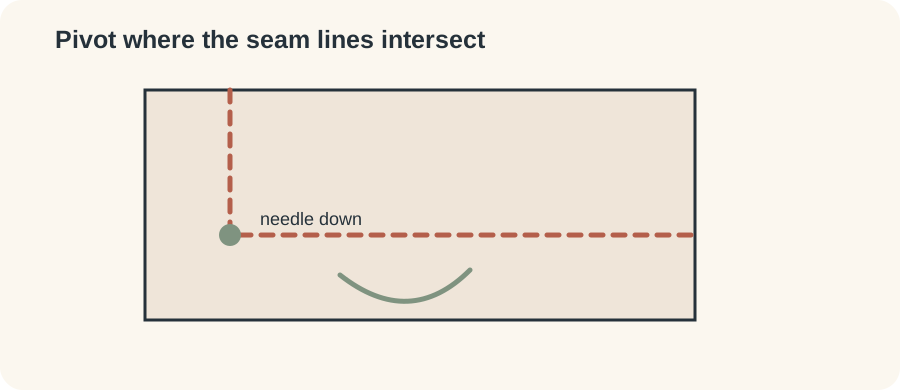
The basic pivot
Sew toward the corner using your chosen seam guide. Stop where the next seam line intersects the current one. Leave the needle down in the fabric, raise the presser foot, rotate the fabric around the needle, lower the foot and continue. Brother manuals describe this same needle-down pivot principle; controls vary by machine.
Where exactly should you turn?
If both adjoining edges use the same seam allowance, the turn point is approximately that allowance away from both raw edges. For a 1/2-inch allowance, for example, the seam lines intersect 1/2 inch from each edge. Marking the intersection on a practice piece makes the geometry obvious.
Do not drag the fabric around the needle
The needle is a pivot, not a nail holding the project against force. Raise the presser foot so the layers can rotate freely. If the needle bends or the fabric resists, stop and reposition rather than twisting harder.
Turning an enclosed corner
If the corner will later be turned right side out, the seam is only part of the job. Trim excess seam allowance diagonally without cutting the stitches, reduce bulky layers where appropriate, turn carefully and press. Different fabrics need different amounts of trimming.
Practice checkpoint
Draw a square seam line on two layers of cotton. Sew all four corners slowly. After each pivot, check that the new seam remains the same distance from the raw edge. If it shifts, focus on stopping at the true seam-line intersection rather than trying to correct after turning.
Corner accuracy drill
Mark a 4-inch square on two layers of stable cotton and draw a second square inside it representing the seam line. Begin on one side and sew to each intersection. Before pivoting, ask whether the needle is actually at the crossing of the two seam lines. After all four turns, measure the sewn square. Unequal sides reveal where you stopped early or late.
For an enclosed corner such as a coaster, compare two samples after turning: one with an untrimmed corner and one with the excess seam allowance carefully reduced. The second will usually turn more cleanly, but cutting too close can weaken the corner. Use a blunt point turner rather than scissors to shape the corner, and stop if the tool is forcing through the seam.