Backstitching and securing a seam
Backstitching is a common way to keep a permanent seam from immediately unravelling, but it is not the only method and it is not appropriate at every construction step.
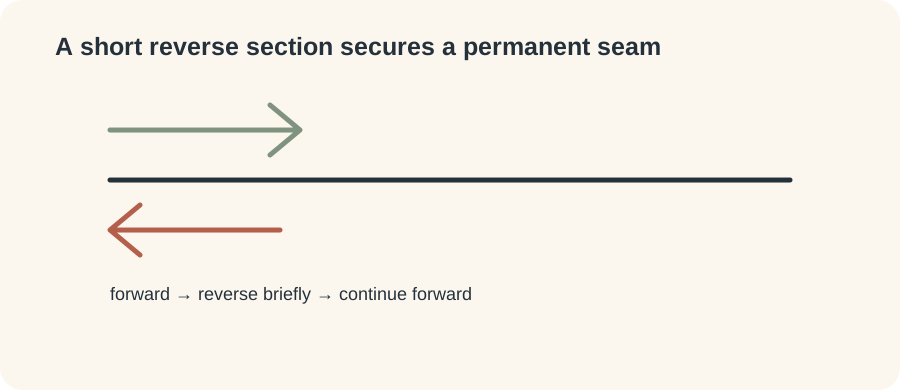
What backstitching does
On many machines, holding or pressing reverse makes the machine sew backward over a short section. Sewing a few stitches forward, a few in reverse and then continuing forward interlocks the thread path at the seam start. The same idea can secure the end. Consult your manual because reverse controls and automatic tie-off functions vary.
A simple beginner routine
Start with the fabric positioned at the seam line and presser foot lowered. Sew a short distance forward, reverse over part of those stitches, then sew forward through the seam. At the end, reverse briefly and finish. Avoid building a thick knot of many passes; the goal is security, not a dense lump of thread.
When not to backstitch automatically
Basting stitches are designed to be removed, so securing them can make removal harder. Gathering stitches are usually left unsecured so the bobbin threads can be pulled. Some delicate fabrics can pucker or become visibly perforated by repeated stitching. Quilting, darts, curved points and specialist construction methods may specify thread tails or another securing method instead.
Thread-tail alternatives
Where a pattern tells you not to backstitch, it may ask you to leave tails and tie them, bury them between layers, or secure them later in a crossing seam. Follow the pattern because the construction sequence often provides the security.
Diagnose ugly backstitching
If reverse stitches form a nest, do not assume the reverse mechanism is faulty. Rethread with the presser foot raised, check bobbin insertion, use a sound needle and hold thread tails if your machine/manual recommends it for the first stitches. Test on the project layers before changing tension.
Common beginner questions
If the seam crosses another permanent seam shortly afterward, the construction sequence may secure it without a heavy reverse section; follow the pattern. If backstitching causes the fabric to be pushed into the needle plate, begin slightly in from the edge, use a leader scrap where appropriate, or choose another securing method specified by the pattern. Very short seam segments can become bulky when nearly every stitch is reversed.
A good practice sample is to sew five short seams on two layers of cotton: one unsecured, one with two or three reverse stitches, one with excessive reversing, one tied by hand, and one that is later crossed by another seam. Pull gently on the samples and compare bulk. The exercise makes “secure enough” easier to recognize than memorising an arbitrary number of reverse stitches.