Why does my sewing machine needle keep breaking?
A broken needle can damage the project or machine, so repeated breakage deserves a cause—not simply another replacement.
Do not pull the fabric
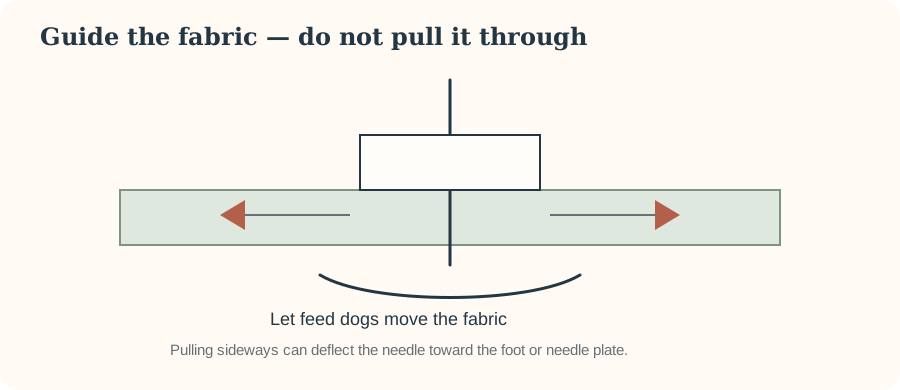
Let the feed dogs move the work. Pulling from behind can flex the needle until it strikes the needle plate or presser foot.
Check installation and compatibility
Use the needle system specified by the machine manufacturer, insert it fully and tighten the clamp securely. Select a type and size appropriate for the material.
Check needle position and presser foot
After changing feet or needle position, turn the handwheel slowly by hand to confirm the needle clears the foot and plate before sewing under power.
Thick transitions need technique
Bulky seam intersections can tilt the presser foot and deflect the needle. Slow down and use appropriate leveling/support techniques recommended for your machine rather than forcing the fabric.
A breaking needle is a stop-and-check symptom
Do not keep installing needles until one survives. Repeated breakage means something in the setup, material handling or machine clearance needs attention. Switch off the machine and account for broken fragments before continuing.
Check installation and compatibility
Use the needle system specified by the manual, insert the needle fully in the correct orientation and tighten the clamp. Select a type and size suited to the fabric and thread. A needle that is too fine for a dense stack can deflect, but simply fitting the largest needle available is not a safe substitute for correct technique.
Never pull or push the fabric through
The feed dogs should move the material. Pulling from behind or pushing from the front can bend the needle sideways so it strikes the presser foot or needle plate. Support the weight of a large project so it does not drag off the table.
Verify foot, stitch width and needle position
A wide zigzag with a straight-stitch foot or incompatible needle position can cause a direct metal strike. After changing feet or settings, use the handwheel slowly in the normal direction to verify clearance if your manual permits this check.
Bulky seams need controlled handling
At thick intersections, slow down and keep the presser foot reasonably level using an appropriate technique/accessory for your machine. Do not force a domestic machine through a stack that it cannot feed or penetrate normally.
Stop after a strike
If the needle has hit the plate or foot, replace it even if it appears straight and inspect the area for damage. Repeated strikes, unusual noise, binding or breakage after correct setup justify manufacturer support or professional service rather than further experimentation.
Check the needle plate after repeated breakage
If a needle has struck the plate, inspect the visible opening for obvious damage and confirm the selected stitch and needle position are compatible with the installed foot. Do not continue sewing if the machine makes a new impact sound or the needle path is visibly obstructed.